The sikke, the tennure and the hırka: what dervishes wear
A whirling dervish wears a tall camel-felt hat called the sikke, a long white skirt called the tennure under a short white jacket, and, at the start of the ceremony, a black cloak called the hırka. Mevlevi teaching reads them as a burial: the sikke is the tombstone of the ego, the tennure its shroud and the hırka its grave, which the dervish leaves behind before he turns.
Checked against its sources on .
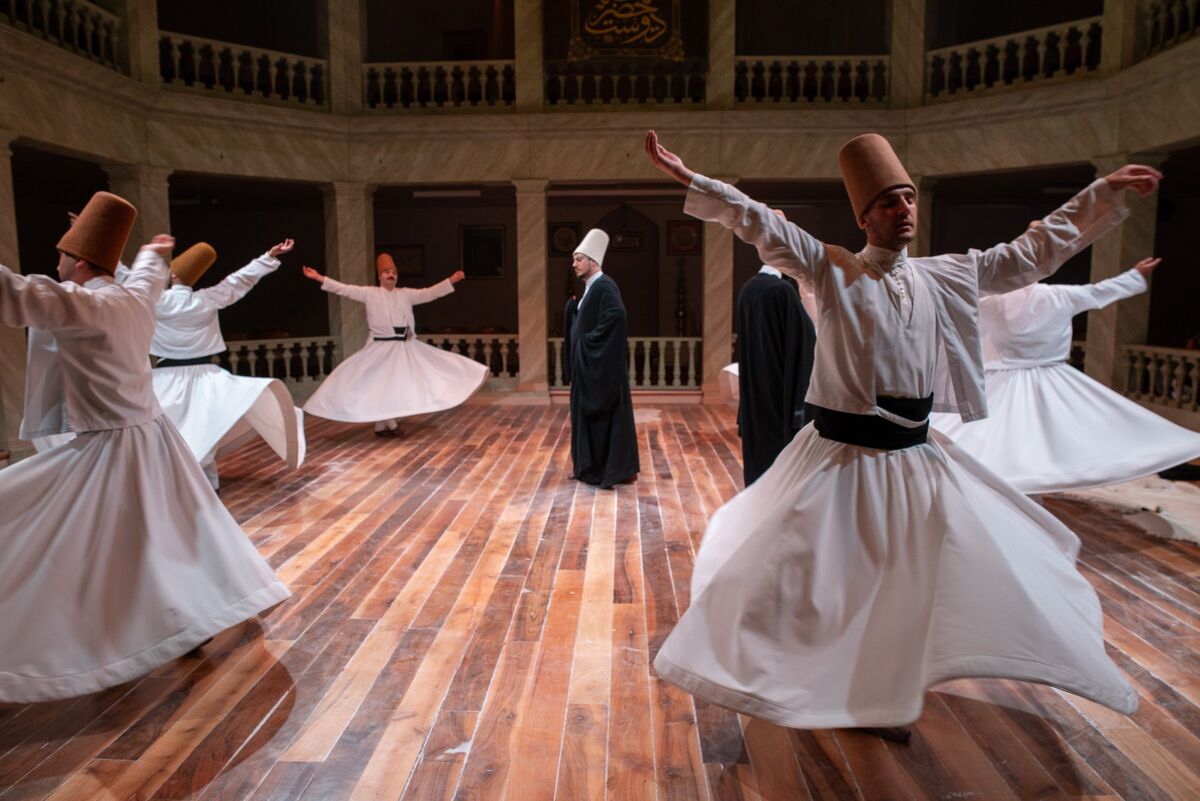
Every piece of a whirling dervish's dress means something, and the meanings are all about death: not the death of the body but of the ego, the self that stands between a person and God. The TDV encyclopedia of Islam puts it in one sentence: the dervish's sikke is his gravestone, his tennure his shroud, and the hırka on his back his grave. The ceremony is a small rehearsal of dying and rising.
Piece by piece
- Sikke
- The tall, brimless hat of camel-hair felt, the colour of the photographs on this site. Meaning: The tombstone of the ego.
- Tennure
- The long white skirt, sleeveless, that spreads into a disc when the dervish turns. Meaning: The shroud.
- Destegül
- The short white jacket with long sleeves worn over the tennure.
- Elif-i nemed
- The belt, a band wrapped around the waist over the tennure.
- Hırka
- The black cloak worn over everything at the start, and let fall before the turning. Meaning: The grave. Leaving it is rising from the grave into the truth.
- Mest
- Soft, thin-soled leather boots, light enough to turn in.
- Destar
- The cloth wound around the base of the sheikh's sikke, which marks his rank.
The moment the cloaks fall
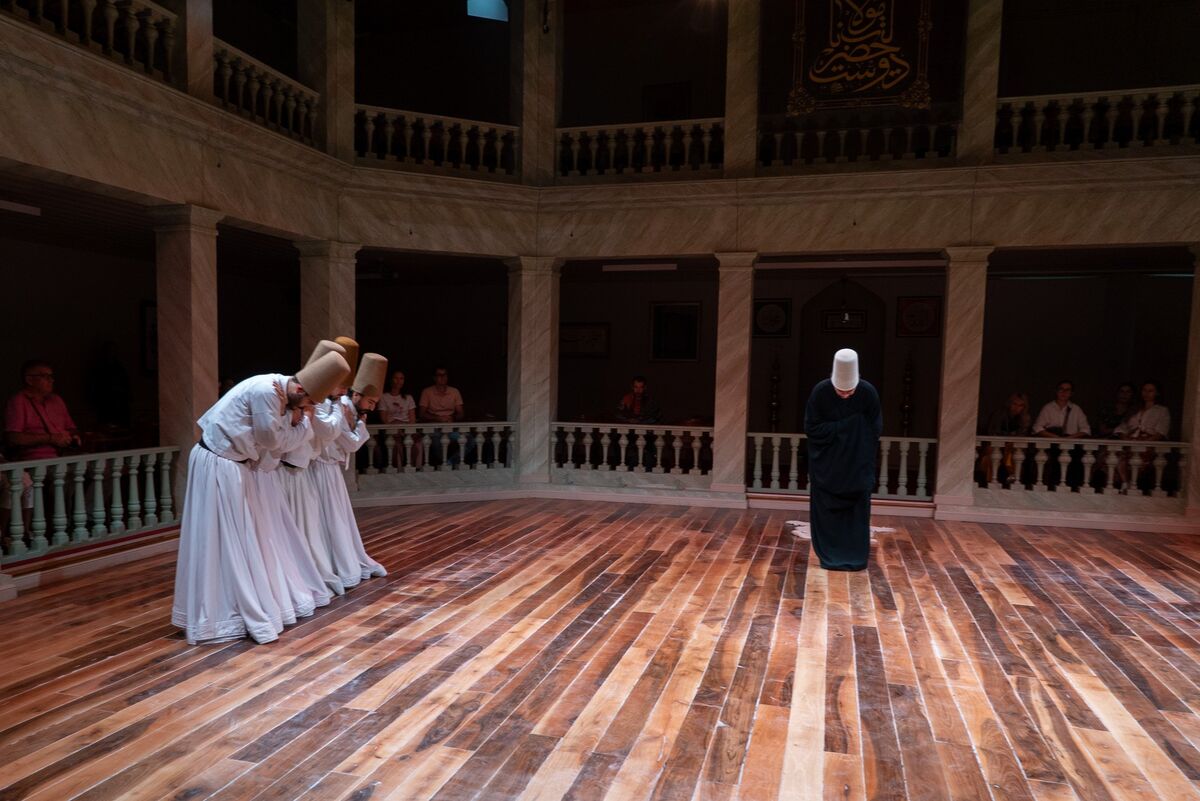
The dervishes enter in their black cloaks and walk three times around the hall behind the sheikh. Then, before the first salutation, they let the cloaks drop. It is the most striking moment of the ceremony for many visitors: a row of black figures becomes a row of white ones. Leaving the hırka is leaving the grave. What follows, the turning, is the soul's journey.
How the sheikh is dressed
The sheikh wears the same sikke, with a cloth, the destar, wound around its base, and a dark cloak he keeps on. He leads the rite from the post, a red sheepskin at the head of the hall. The dervishes bow towards it each time they pass.
Can you buy one?
Sikkes and costume versions of the tennure are sold in the Grand Bazaar and online, and make a fine souvenir. The ones worn in a lodge are not costumes: traditionally a dervish's sikke is placed on his head with a prayer when he is accepted into the order.
Questions people ask
- What is a dervish hat called?
- The sikke: a tall, brimless hat of camel-hair felt. In Mevlevi symbolism it stands for the tombstone of the ego.
- Why do whirling dervishes wear white?
- The white tennure skirt stands for the shroud: the dervish turns as one who has died to the self. The white also makes the turning visible, as the skirt opens into a disc.
- Why do the dervishes take off their black cloaks?
- The black hırka stands for the grave. Letting it fall at the start of the turning means leaving the grave behind and being born into the truth.
- What does the dervish's crossed-arm pose mean?
- At the start of each turn the arms are crossed over the chest with the hands on the shoulders. Tradition reads the shape as the numeral one, a witness to the oneness of God.