Hodjapasha or a working lodge? What each one is
The Hodjapasha Culture Center in Sirkeci stages a whirling dervish ceremony every night at 19:00 (and at 17:00 on Tuesday, Thursday, Saturday and Sunday) in a converted 15th-century bathhouse: a 5-minute film, 10 minutes of music and 45 minutes of Sema. It is well run and central. The lodge ceremony at Kasımpaşa Mevlevihanesi is the alternative if you want the rite in a working Mevlevi lodge.
Checked against its sources on .
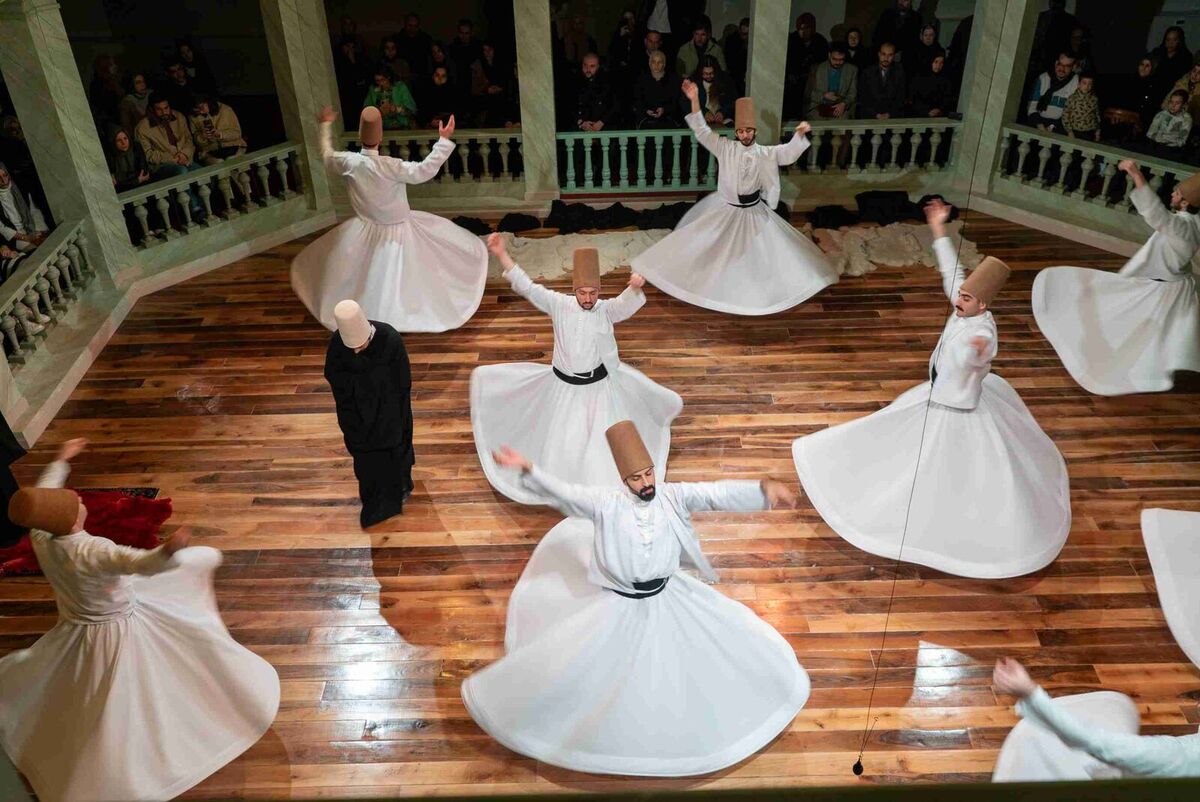
Hodjapasha is the name most people find first when they search for whirling dervishes in Istanbul, and for good reason: it runs every night, it is a few minutes from Sultanahmet, and it is professionally organised. This page sets out what it is, from Hodjapasha's own published information, and how it compares with the lodge ceremony we run the visitor site for. We have no connection with Hodjapasha.
Hodjapasha at a glance
| Where | Hocapaşa Hamamı Sokak 3B, off Ankara Caddesi, Sirkeci |
|---|---|
| Building | A 15th-century double bathhouse from the reign of Mehmed II, restored as a culture centre in 2008 |
| When | Every day at 19:00; a “happy hour” show at 17:00 on Tuesday, Thursday, Saturday and Sunday |
| Programme | 5-minute film, 10 minutes of Sufi music, 45 minutes of Sema; exhibition before or after |
| Tickets | On the official booking page, hodjapasha.com; the 17:00 show and children aged 7 to 12 pay less |
| Rules | No children under 7; no photography; latecomers admitted only in the first 10 minutes; arrive 30 minutes early |
| Access | The theatre is not suitable for wheelchairs, by Hodjapasha's own FAQ |
Hodjapasha and Kasımpaşa, side by side
| Aspect | Hodjapasha | Kasımpaşa Mevlevihanesi |
|---|---|---|
| What it is | A staged Sema in a converted bathhouse | The Sema held in a working Mevlevi lodge |
| Explanation | A 5-minute film | A live introduction by the sheikh, Turkish and English |
| Turning | 45 minutes of the hour | The four salutations, after the hymn, the ney and the walk |
| Days | Every day | Wednesday, Friday, Sunday |
| Time | 19:00 (or 17:00) | 17:00 |
| Children | 7 and over | Any age, if they can sit quietly |
| Wheelchair | No | Yes, with a lift |
| Location | Sirkeci, walking distance of Sultanahmet | Kasımpaşa, Beyoğlu, 16 minutes' walk from Galata Tower |
Which to choose
Choose Hodjapasha if you are staying in the old city and want an easy evening, if your free night is a Monday, Tuesday, Thursday or Saturday, or if you want the turning to take up most of the hour. Its visitors' most common complaint on booking sites is that the music-first opening feels long; knowing the order in advance helps.
Choose Kasımpaşa if you want to see the Sema where it belongs, in a Mevlevi lodge, with the sheikh explaining it first. Guests there most often praise the introduction and the quiet of the hall, and most often complain about finding it: the lodge is down steep lanes in Kasımpaşa, so read the directions or take a taxi. See dates and reserve.
Many visitors do both, on different evenings. They are different experiences of the same tradition.
Questions people ask
- How long is the Hodjapasha whirling dervish show?
- Sixty minutes, by Hodjapasha's own programme: a 5-minute introductory film, 10 minutes of Sufi music and 45 minutes of Sema.
- Where do I buy Hodjapasha tickets?
- On Hodjapasha's official booking page, hodjapasha.com, which lists the current prices: the 17:00 show costs less than the 19:00 show, and children aged 7 to 12 pay less than adults. Resellers charge different amounts, so compare with the official page.
- Can children go to Hodjapasha?
- Not under 7. Hodjapasha states that children under 7 are not allowed.
- Can you take photos at Hodjapasha?
- No. Hodjapasha states that photography is not allowed during the ceremony.
- Is Hodjapasha a real ceremony or a show?
- Hodjapasha describes it as a spiritual ceremony that contains religious symbols. It is performed by semazens and live musicians in a converted bathhouse on a nightly schedule, which makes it a staged ceremony rather than a lodge's own rite.